Thursday, April 28, 2011

Podcast Episode 5: Malcolm X and Hero Worship


On this episode of There is No Spoon we discuss the legacy of Malcolm X. X has become an icon of human rights activism, Pan-Africanism and Islam. Panelists Dumi L'Heureux Lewis (City College of New York), Fatima Ashraf (Community Activist), Fouad Pervez (Georgetown University), Ibrahim Abdul-Matin (Author of Green Deen), Mayatha Alhassen (University of Southern California) and Zaheer Ali (Columbia University) discuss the recent publication of Manning Marable's "Malcolm X: A Life of Re-Invention" and its influence on X's legacy.


Podcast Powered By Podbean

Download this episode (right click and save)


You can subscribe to the No Spoon Podcast via itunes by clicking here.

Saturday, April 9, 2011

Podcast Episode 4: On The PATRIOT Act

Today's installment of the There Is No Spoon podcast series examines civil rights and civil liberties issues raised by the PATRIOT Act (portions of which are set to expire in May 2011) and FBI stings authorized under the 2008 Attorney Generals' Guidelines issued by then AG Michael Mukasey. We're joined by a distinguished panel of experts who have engaged these concerns from multiple perspectives. 

Emily Berman is Counsel to the Brennan Center for Justice at NYU School of Law and author of Domestic Intelligence: New Powers, New Risks, a 2011 report documenting problems with DOJ and FBI policies under the 2008 Mukasey Guidelines. Kay Guinane is Program Manager at the Charity and Security Network, and author of the 2009 report, How the Work of Charities Can Counter Terror, which addresses the material support standard of the PATRIOT Act and how it exacerbates some of the root causes of terror. Christina Abraham is Civil Rights Director at CAIR Chicago and has represented numerous individuals interviewed by the FBI, while also speaking and writing about abuses by the Bureau and other government agencies. Shahid Buttar from the No Spoon team is Executive Director of the Bill of Rights Defense Committee and submitted a FOIA request to the FBI in 2008 that eventually prompted disclosure of the Bureau's internal regulations implementing the 2008 Mukasey Guidelines.


Listen here:

Podcast Powered By Podbean

Download this episode (right click and save)

Friday, March 25, 2011

Podcast Episode 3: The Peter King Hearings

On this edition of the There is No Spoon show, we discuss the congressional hearings on domestic terrorism, organized by Congressman Peter King (R-NY).  The hearings, divisive and controversial, offered divergent perspectives of Muslim Americans: one as law-abiding people who are unjustly targeted, the other as a community ignoring radicalization among its own.

Joined by Corey Saylor, the Director for Government Affairs of CAIR (Council on American-Islamic Relations), the No Spoon team of Fouad Pervez, Reggie Miller, and Fatima Ashraf puts the hearings into context.  Several minority communities throughout history have been "McCarthy-ized" by the government.  Mr. Saylor provides insight into the importance of the hearings, the commendable reactions of the Muslim American community, and next steps.  For additional, interesting perspectives on the hearings, Peter King, and Muslim Americans, check out: this Huffington Post piece by Ingrid Mattson; this Washington Post article by Michelle Boorstein; and Representative Keith Ellison's (D-MN) testimony from the hearings.
Download this episode (right click and save)

Friday, February 25, 2011

Podcast Episode 2: On Wisconsin

Protesters pack the State Capital building in Madison
On this edition of the There is No Spoon show, we discuss the organizing happening in Wisconsin to prevent the passing of a bill that would end public sector unions from being able to collectively bargain.  We provide a basic overview of the situation, some stories from on-the-ground protesters, and historical context of labor unions and labor organizing in Wisconsin and beyond. Our guests, Awais Khaleel (long-time Wisconsin political organizer and Howard Law Student); Marla Delgado (UW-Madison graduate student and community organizer); and Michael Paarlberg (Georgetown graduate student and freelance writer for the Guardian) discuss important issues such as inconsistencies in budget deficit claims and blames as well as the truth behind who makes more - private or public sector employees. Now that the bill has passed the Wisconsin state assembly, tune into the podcast to understand the national repercussions if it passes the state senate.


Podcast Powered By Podbean

Download this episode (right click and save)

Wednesday, February 23, 2011

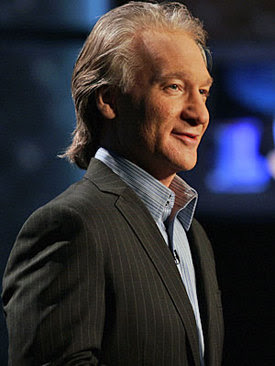
Bigotry, Omitted Variable Bias, and Bill Maher

Bill...can we have a word?
I've been entertained by the comedian (he's not a journalist, people, he just follows some mainstream media news and talks about it with some celebrities, fake experts, and [occasionally] actual experts) Bill Maher for many years. I appreciate his show, enjoy that he uses his name and stage to bring about discourse on politics, and often find myself agreeing with what he says. However, on one specific topic, Maher makes me very angry...and, as Mr. McGee learned many years ago, don't make me angry; you wouldn't like me when I'm angry. You see, when it comes to discussions about Muslims and/or Arabs, Bill Maher is a bigot, or at the very least, bigot-ish. He's bigot-ish because he uses a level of analysis that would make most high schoolers uncomfortable. He uses this preposterous thinking to come to some really dangerous, reductionist conclusions that smell of the worst kind of Orientalism. And the audience ("liberals" who seemingly don't get it and enjoy cheering on their hero) goes along with the sham. Except it's not just a sham. It's quite dangerous. See the impact of Islamophobia on Muslims in America today? See the overt venomous racist discourse we see and hear so often right now? Well...Bill Maher is part of the problem. And somebody needs to call him on it and knock his discourse straight out. Enter (stage left): me and my foot to break off in Maher's ass.