Showing posts with label National Security. Show all posts

Wednesday, September 11, 2013

Podcast Episode 8: Reflections on the post 9-11 Decade

Note: this podcast originally appeared on No Spoon on October 14, 2011.

Photographer:  MANDEL NGAN Copyright/Source: AFP/Getty Images


On this two-part episode of There is No Spoon we discuss the post 9-11 decade. We cover the cultural and political shifts that we've witnessed in America since the day of the attacks. In particular, we address the leadership gaps, the PATRIOT act and the civil liberties that Americans have "traded" (knowingly or unknowingly) over the past 10 years.
Shahid Buttar, the Executive Director of the Bill of Rights Defense Committee offers an overview of just how far we've wandered from the ideals of a free American democracy, and we talk about whether we can find a way back on track so that we can reclaim some of our constitutional rights.

Joining the discussion are No Spoon team members: Will Ley,  Reggie Miller, Fouad Pervez and Jen Palacio.
Listen to Part 1:
Listen to Part 2:
Download part 1: Download this episode (right click and save)
Download part 2:Download this episode (right click and save)
More about the Bill of Rights Defense Committee:
Ten years ago on September 11, 2001, the United States suffered the worst terrorist attack in the nation’s history. In the panic of the weeks that followed, the American government began changing its counterterrorism policies in ways that undermined constitutionally guaranteed civil liberties, culminating in the passage of the USA PATRIOT Act on October 26, 2001. Within two weeks of that law’s passage, on November 10, 2001, organizers in Massachusetts founded the Bill of Rights Defense Committee to fight against that dangerous law and others that followed.
To mark the tenth anniversary of these pivotal events in American history and the history of our organization itself, the Bill of Rights Defense Committee is running a series of articles looking back on the last ten years.

The 9/11 Decade - A Leadership Gap

Note: This post originally appeared on No Spoon on September 18, 2011.

We've just recently seen the 10 year anniversary of 9/11. There have been countless articles and pieces of analysis in the media about the topic, but I wanted to touch on an issue that I think many have neglected: the lack of political and civic leadership in framing 9/11 as a tragedy to connect Americans with others across the globe, which I'd argue has resulted in mostly a lost decade. Instead, 9/11 became an event to separate America from others. This helped enable hyper-nationalism and increased American exceptionalism, both very unusual given the nature of the event. Many leaders, particularly political ones, played this up. A consequence has been that Americans are, today, more likely to distance themselves from various out-groups, both outside of, and in, America (the Islamophobia industry is one of the downstream effects of this).

9/11 - 12 Years Later

We at No Spoon have written and discussed the events of September 11th and American society in the years after quite a bit over the years. A lot of what we've discussed is as relevant today as it was then, so I wanted to put up some of our previous posts. Look for them momentarily. In the meantime, I can't help but think of all the innocent people whose lives were taken or shattered in those planes, those towers, the Pentagon, Afghanistan and Iraq, the northern areas of Pakistan, Yemen, as well as all the transgressions against the Constitution and the Bill of Rights in the name of security.

Sunday, September 11, 2011

The greatest casualty of 9/11: The America we knew

Shahid Buttar is the Executive Director of the Bill of Rights Defense Committee.


Reflections on the 9/11 attacks are important and moving. But most overlook the enduring legacy of the attacks, in the form of the vastly greater damage done to American principles over the past decade. Whether in the context of surveillance, torture, or the congressional cowardice that has enabled them, our leaders have sullied the legacy of an America that once inspired the world.

LibertyEarlier this summer, when facing a crucial accountability moment for an agency that continues to abuse the rights of millions of Americans, members of Congress asked no tough questions, avoided controversy, and submitted to a White House proposal to entrench the FBI leadership—at the same time as they fought to the knuckles over issues that Congress created in the first place by spending the country into a fiscal black hole and absurdly cutting taxes in the midst of multiple wars.

Most astounding in all this is Congress's apparent abandonment of its own institutional interests. Even in the face of documented lies by the FBI's leadership to congressional committees and repeated proof that Congress, the press, and the public are hearing only tiny slices of the whole truth, Congress has failed to use its many tools to seek transparency and investigate executive abuses.

Monday, May 23, 2011

Out of the Frying Pan and Into the Fire: Why the FBI Needs New Leadership

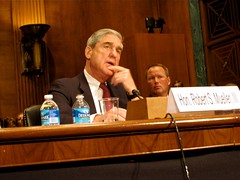
FBI Director Robert Mueller

The last ten years have witnessed an assault on the constitutional rights of law-abiding Americans, led largely by the FBI. Appointed mere days before the 9/11 attacks, Director Robert S. Mueller III has guided the bureau through the resurrection of many long discredited practices from its COINTELPRO era. Yet, the Obama administration has proposed extending Mueller's term as FBI director. Congress should reject the proposal and insist on a nominee from outside the bureau to restore accountability, law and order. Just ask Nick Merrill in New York, Joe Iosbaker in Chicago or Ahmadullah Niazi in Los Angeles: three law-abiding Americans whose constitutional rights are among the casualties of the last decade.

Thursday, June 17, 2010

Restoring the Fourth Amendment: How We the People Can Win Over Washington

Despite promises of change, the Obama administration has proven itself either unwilling—or unable—to shift the paradigm driving increasingly invasive surveillance, or increasingly pervasive profiling according to race, religion, and national origin. Nearly halfway through the Obama administration's term, the battle to banish the Bush administration's policy legacy remains largely unfought, let alone won.

But this is no time for progressive and libertarian constitutionalists to throw in the political towel. While "change you can believe in" may have been a premature promise from our president, we at the grassroots enjoy ample opportunities to shift the landscape in DC.

Whether concerned by government spying, or the guilt by association apparent in profiling Latinos, African Americans, and Muslims, Arabs, and South Asians for various so-called "signature crimes," limits on local law enforcement authorities offer the potential to galvanize solidarity among communities of color. Measures restricting domestic intelligence operations can also attract the support of libertarians—including some elements of the Tea Party—disaffected by the Washington consensus favoring expanding executive power.


Thursday, February 11, 2010

About Miranda Rights/Richard Reid/Newt Gingrich/Abdulmutallab

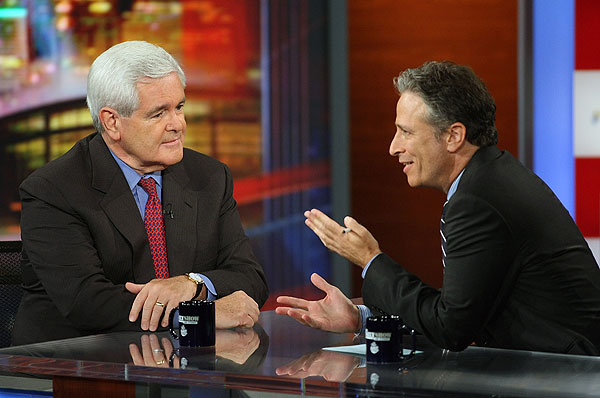
There has recently been a flap over Newt Gingrich's Daily Show interview (and subsequent comments, along with others by various Republicans) related to the Obama administration's handling of Umar Farouk Abdulmutallab, the man who attempted to blow his underwear up on a flight to Detroit. The GOP criticism is basically that the Obama administration read Miranda rights to Abdulmutallab and generally treated him like he was an American citizen. They argue that this is completely unacceptable behavior...he's a foreign terrorist, and shouldn't get the benefits of our legal system. Stewart raised the issue of Richard Reid, the shoe bomber, with Gingrich - Reid was also read his Miranda rights and largely treated within the rules of the U.S legal system. Gingrich's response was that Reid was a U.S. citizen - other Republicans have been making this point as well. Of course, this is not true at all - Reid was a British national. The left has been arguing that this is proof of hypocrisy - Abdulmutallab basically was treated like Reid, but the GOP didn't go after President Bush. This is, of course, entirely true, but I think we're missing the bigger point. We got good intelligence from Abdulmutallab. Why isn't this the central point of discussion?

Yeah, look, today's Republican party is a hypocritical one, and I think it is important to point this out (note: I think the same standard applies to the Democrats, too - I'm an equal hypocrisy hater). But why is this the central point of discussion? The Abdulmutallab case is really a testament to the effectiveness of normal legal practices. Gingrich talked about how the Obama administration's treatment of Abdulmutallab was wrong because he's not a U.S. citizen and because it makes America less safe. Well, that last point is kind of the crux of the argument, and the one we really should focus on. Apparently, the US got a lot of useful intel from Abdulmutallab, Mirandized and all. Is there reason to believe treating him more harshly, say, waterboarding, would have gotten us more info? We've already discussed this on the Spoon here, and here, and, at the very least, we don't see that being likely. We're not exactly going out a limb with that view. A hell of a lot of experts agree that harsh interrogation techniques don't get you good information. So, the flap over treating Abdulmutallab "lightly" seems to be problematic in that, by making such an argument, the GOP leaves itself open to being rightly accused of pushing harder interrogation to appear tougher, while actually making us LESS SAFE. You know, because harsher interrogation might actually get us less intelligence. Now, if only that point could be discussed more often, so as to finally kill this dangerous tough-guy debate. And by the way, the "tough-guy" lawmakers who want harsher interrogation look like kids that got beat up for lunch money growing up. So, you know, just throw a punch at them every now and then. Like calling them out for their discourse on this that makes America less safe.