 Every year, we try to post about Columbus Day, a really troubling American holiday. This year will be short and sweet. First, there has been an increase in Indigenous People's Days across the country, and the demand might be rising. In the last year alone, at least 14 places have made the change from Columbus Day to Indigenous People's Day. This is encouraging. Second, recognition of American brutality to American Indians/Native Americans (I've gotten a mixed response from the community about what they prefer to be called) has absolutely risen. This can be seen in sports, hardly a place for American sensibilities (though that is also changing, thanks to #BlackLivesMatter, amongst other movements). Several teams have changed mascots, have changed chants, have changed logos, and there's a huge stink over one that hasn't (the D.C. football team, who, coincidentally, seem to be subject to a series of unfortunate events....just saying). Third, American Indian/Native American culture has gotten a lot more attention, evidenced by the very popular new-ish Smithsonian Museum. I'm not saying everything is grand, and that we can finally be rid of the inaccurate portrayal of Columbus and the minimization of the role of Native Americans/American Indians in American history (conservative Texas schools have a large influence on national textbooks, and they have definitely gotten some troubling inaccuracies into them), but this is a good start. Also, last year, God, influenced by Howard Zinn's writing, weighed in on the debate (this is a hilarious video). For more thoughts, click here.
Monday, October 10, 2016
Columbus Day: Is the Tide Turning?
Every year, we try to post about Columbus Day, a really troubling American holiday. This year will be short and sweet. First, there has been an increase in Indigenous People's Days across the country, and the demand might be rising. In the last year alone, at least 14 places have made the change from Columbus Day to Indigenous People's Day. This is encouraging. Second, recognition of American brutality to American Indians/Native Americans (I've gotten a mixed response from the community about what they prefer to be called) has absolutely risen. This can be seen in sports, hardly a place for American sensibilities (though that is also changing, thanks to #BlackLivesMatter, amongst other movements). Several teams have changed mascots, have changed chants, have changed logos, and there's a huge stink over one that hasn't (the D.C. football team, who, coincidentally, seem to be subject to a series of unfortunate events....just saying). Third, American Indian/Native American culture has gotten a lot more attention, evidenced by the very popular new-ish Smithsonian Museum. I'm not saying everything is grand, and that we can finally be rid of the inaccurate portrayal of Columbus and the minimization of the role of Native Americans/American Indians in American history (conservative Texas schools have a large influence on national textbooks, and they have definitely gotten some troubling inaccuracies into them), but this is a good start. Also, last year, God, influenced by Howard Zinn's writing, weighed in on the debate (this is a hilarious video). For more thoughts, click here.

Monday, October 13, 2014
Columbus Day: Make it Stop!

We shouldn't celebrate a man who outright massacred an indigenous population. What makes matters worse is that children generally get a whitewashed (yes, ironic term) history of Columbus, where he is some hero who discovered a land (he obviously didn't), and are taught nothing about the horrific acts he committed.
So, maybe you think we shouldn't be teaching young kids about genocide. Ok, but at the very least, we shouldn't be teaching them to lionize a terrible person. Just keep in mind what Columbus actually did. We've known about the specifics, in pretty specific and graphic detail, for quite some time now, thanks to La Casas.
Anyway, I wanted to refer you to
Columbus - The Hidden History from Nonchalant Filmmakers on Vimeo.
Tuesday, August 5, 2014
A Guide to MEDIA ACTIVISM by Guest Writer Sayeed Khan

It’s clear that mainstream news media is consistently biased in certain matters relating to foreign policy. Coverage of the recent attacks in Gaza are yet another example of info that is one sided or simply wrong. The growth of social media has given people a chance to present alternative news and influence public opinion. Public opinion influences public policy, and the views of the masses should never be underestimated.
In addition to social media, there is another way to have a
direct impact on mainstream news. “Media Activism” is how I refer to the
aggressive monitoring of all forms of media through online comments, radio call
ins, and letters to the editor.
Media Activism is a democratic way to monitor--and even
influence--news media and the opinions of those who read or view it. This is
something that everyone can participate in, and there are no excuses not
to. Instead of simply complaining about
biased news media, why not do something about it? If there were thousands of comments in
support of Palestinians, for example, this would influence other readers, as
well as producers of news content.
The current focus is on mainstream news media sources which
have an online presence. TV Networks such as CNN and ABC News and newspapers
such as Chicago Tribune and New York Times all have online comments after each
article. The following explains how commenting on these articles can make a big
difference.
Tuesday, July 22, 2014
Building a Balanced Media for #Gaza

I ran into an old friend on the train the other day. He asked how I was and I responded, "completely distraught, aren't you?" He wasn't. We proceeded to have a riveting conversation about all of the crimes against humanity around the world and why Gaza in particular was so alarming to people.
It's "mowing the grass," he said. They do this every other year or so, everyone gets hot and bothered, then things quiet down, everyone forgets, and then the grass needs to be cut again in another two years.
I tried my best to convince him that it was different this time. People who typically shrug their shoulders, are speaking out. People who typically say, "I could never boycott Starbucks," are giving up their coffees. Reporters are being taken out of Gaza by networks then being put back in because of public pressure. It's different!
Wednesday, June 4, 2014
Erasing the Past - Redux

Sunday, May 11, 2014
Bill Maher Still Doesn't Understand Causality
 |
| This is what Maher thinks of causality. |
Monday, October 14, 2013
Columbus Day: A Terrible American Holiday
Anyway, I wanted to refer you to
Columbus - The Hidden History from Nonchalant Filmmakers on Vimeo.
Wednesday, September 11, 2013
Podcast Episode 8: Reflections on the post 9-11 Decade
Note: this podcast originally appeared on No Spoon on October 14, 2011.
On this two-part episode of There is No Spoon we discuss the post 9-11 decade. We cover the cultural and political shifts that we've witnessed in America since the day of the attacks. In particular, we address the leadership gaps, the PATRIOT act and the civil liberties that Americans have "traded" (knowingly or unknowingly) over the past 10 years.
 | |||
Photographer: MANDEL NGAN Copyright/Source: AFP/Getty Images
|
Shahid Buttar, the Executive Director of the Bill of Rights Defense Committee offers an overview of just how far we've wandered from the ideals of a free American democracy, and we talk about whether we can find a way back on track so that we can reclaim some of our constitutional rights.
Joining the discussion are No Spoon team members: Will Ley, Reggie Miller, Fouad Pervez and Jen Palacio.
Listen to Part 1:
Joining the discussion are No Spoon team members: Will Ley, Reggie Miller, Fouad Pervez and Jen Palacio.
Listen to Part 2:
Download part 1: Download this episode (right click and save)
Download part 2:Download this episode (right click and save)
More about the Bill of Rights Defense Committee:
Ten years ago on September 11, 2001, the United States suffered the worst terrorist attack in the nation’s history. In the panic of the weeks that followed, the American government began changing its counterterrorism policies in ways that undermined constitutionally guaranteed civil liberties, culminating in the passage of the USA PATRIOT Act on October 26, 2001. Within two weeks of that law’s passage, on November 10, 2001, organizers in Massachusetts founded the Bill of Rights Defense Committee to fight against that dangerous law and others that followed.
To mark the tenth anniversary of these pivotal events in American history and the history of our organization itself, the Bill of Rights Defense Committee is running a series of articles looking back on the last ten years.
The 9/11 Decade - A Leadership Gap
Note: This post originally appeared on No Spoon on September 18, 2011.
 We've just recently seen the 10 year anniversary of 9/11. There have been countless articles and pieces of analysis in the media about the topic, but I wanted to touch on an issue that I think many have neglected: the lack of political and civic leadership in framing 9/11 as a tragedy to connect Americans with others across the globe, which I'd argue has resulted in mostly a lost decade. Instead, 9/11 became an event to separate America from others. This helped enable hyper-nationalism and increased American exceptionalism, both very unusual given the nature of the event. Many leaders, particularly political ones, played this up. A consequence has been that Americans are, today, more likely to distance themselves from various out-groups, both outside of, and in, America (the Islamophobia industry is one of the downstream effects of this).

The Greatest Casualty of 9/11: The America we Knew
Note: This post originally appeared on No Spoon on September 11, 2011.

Shahid Buttar is the Executive Director of the Bill of Rights Defense Committee.
Reflections on the 9/11 attacks are important and moving. But most overlook the enduring legacy of the attacks, in the form of the vastly greater damage done to American principles over the past decade. Whether in the context of surveillance, torture, or the congressional cowardice that has enabled them, our leaders have sullied the legacy of an America that once inspired the world.
Earlier this summer, when facing a crucial accountability moment for an agency that continues to abuse the rights of millions of Americans, members of Congress asked no tough questions, avoided controversy, and submitted to a White House proposal to entrench the FBI leadership—at the same time as they fought to the knuckles over issues that Congress created in the first place by spending the country into a fiscal black hole and absurdly cutting taxes in the midst of multiple wars.
Shahid Buttar is the Executive Director of the Bill of Rights Defense Committee.
Reflections on the 9/11 attacks are important and moving. But most overlook the enduring legacy of the attacks, in the form of the vastly greater damage done to American principles over the past decade. Whether in the context of surveillance, torture, or the congressional cowardice that has enabled them, our leaders have sullied the legacy of an America that once inspired the world.
Earlier this summer, when facing a crucial accountability moment for an agency that continues to abuse the rights of millions of Americans, members of Congress asked no tough questions, avoided controversy, and submitted to a White House proposal to entrench the FBI leadership—at the same time as they fought to the knuckles over issues that Congress created in the first place by spending the country into a fiscal black hole and absurdly cutting taxes in the midst of multiple wars.
9/11 - 12 Years Later
We at No Spoon have written and discussed the events of September 11th and American society in the years after quite a bit over the years. A lot of what we've discussed is as relevant today as it was then, so I wanted to put up some of our previous posts. Look for them momentarily. In the meantime, I can't help but think of all the innocent people whose lives were taken or shattered in those planes, those towers, the Pentagon, Afghanistan and Iraq, the northern areas of Pakistan, Yemen, as well as all the transgressions against the Constitution and the Bill of Rights in the name of security.
Monday, April 22, 2013
The Boston Marathon Bombing: Impact and Implications

Tuesday, March 19, 2013
When Sports and Politics Collide - with Dave Zirin
 Dave Zirin, the sports editor of the Nation magazine (who you've probably seen on TV or heard on the radio at some point) joins Ibrahim Abdul-Matin and Fouad Pervez from the No Spoon team to discuss several recent sports events and the political issues underpinning them. In this episode, we discuss Florida Athletic University's decision to sell their stadium's naming rights to a private prison company, the problems with the NCAA as an institution, the role of big money in college sports, baseball academies as sweatshops in Latin America (arguably the most under-covered sports story in the past few weeks, related to Hugo Chavez's death), and the NCAA basketball tournament. Be sure to get Dave's new must-read book, "Game Over: How Politics Has Turned the Sports World Upside Down", which recently received a glowing review in Sports Illustrated. We had technical issues (when taping, Dave's video was frozen and inverted in black and white, hence the references to Ghostface Zirin - YouTube apparently just gave him a blank screen in the final cut), but Google couldn't stop the latest No Spoon episode!
Tuesday, February 26, 2013
The Banal Militarism of Hollywood

Thursday, February 14, 2013
Guns are not made in the Ghetto
Wednesday, January 30, 2013
About Ending Perpetual War...

Monday, January 21, 2013
Who hasn't tried to co-opt MLK?
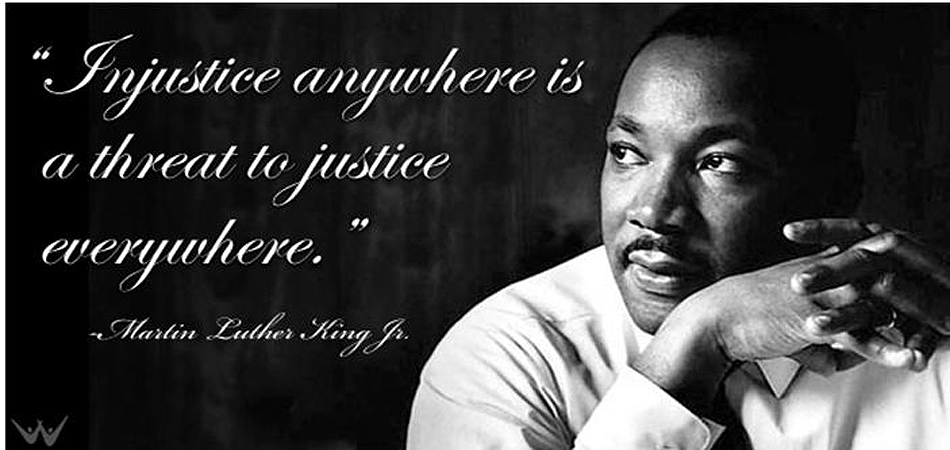
The MLK we're told about (that I've written about before - click here and here to read more) was a man who told us to live together in peace, for whites and blacks to embrace each other, and let our kids play together. This isn't a bad message at all, of course. However, we rarely get the more complicated politics that MLK touched on. He understood the connection between racism, economics, and politics. "I have a dream" is very special and historical...but the dream MLK wanted us to get to involved addressing war, poverty, and the nature of our political system. He was pro-labor (he was assassinated while supporting sanitation workers on strike in Memphis). He was critical of the economic divide in America. He was staunchly opposed to the Vietnam war, and not supportive of our foreign policy in general. He thought we exploited the poor at home and abroad. He had problems with moderate white American leaders, who would be willing to compromise on social issues to bring about a "peace" without justice. So...yeah, not as warm and fuzzy as we hear about. Of course, reality makes him (and those who fought alongside him - one man does not make a movement) far more courageous, noble, and worthy of rememberance. It wasn't easy to fight against segregation. Fighting against segregation, Vietnam, poverty, aspects of capitalism, political dealmaking...yeah, that's a lot more challenging.
Thursday, January 17, 2013
What about the minds of the everyday people?

Mental health is today’s hot topic given last month’s
tragedy in Newtown,
Connecticut. The importance of this
issue is no longer a topic for discussion but a topic for action. It is imperative that our health care system create
room for mental illness to be de-stigmatized, detected, treated, and
prevented. As I see it, the diagnosis
and treatment of heart disease is great for the one who has it; the diagnosis
and treatment of mental illnesses is great for the person, their family, and
their entire community.
But, as we begin to focus detection of mental illness on high-risk
individuals in order to prevent heinous crimes like those in Aurora,
Colorado, Oak
Creek, Wisconsin, and Newtown,
Connecticut, we cannot forget the importance of the mental health of the
general population. Just as no one is
safe from developing cancer these days, no one is safe from a mental health
issue. Our world is a high stress place
and with events like yesterday’s becoming more commonplace, it’s becoming even
more stressful.
Thursday, November 22, 2012
Islamists can make...peace?
 |
| Children in Gaza celebrate the ceasfire |
Wednesday, October 31, 2012
The Plutocrats are Coming!

Subscribe to:
Posts (Atom)